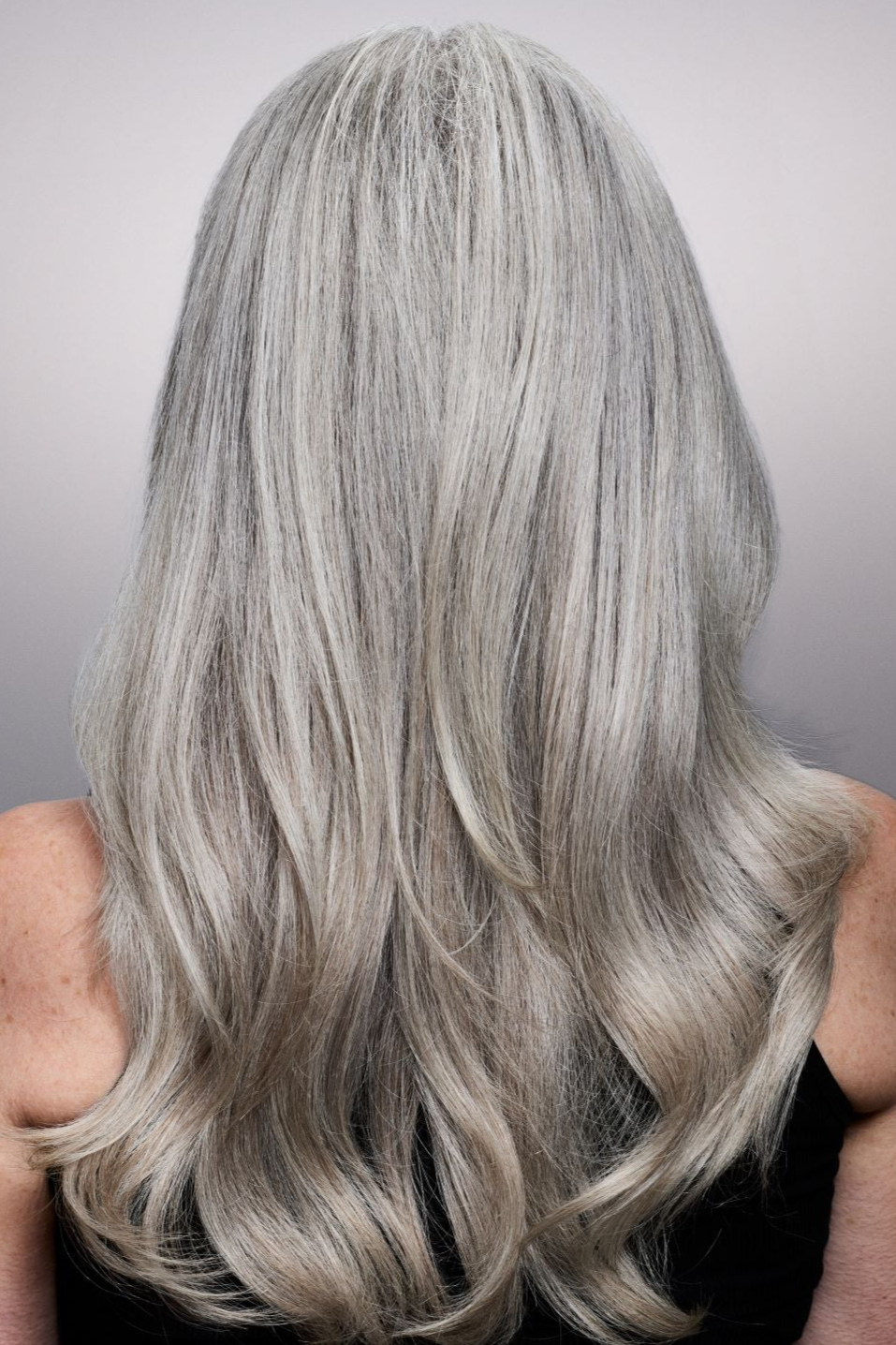

If gray hair yellowing or brassy undertones is bothering you, we got you
While the color yellow is typically associated with good vibes, happiness, smiley faces and sunshine, it’s not so awesome when you find those tones throughout your hair. And unfortunately, silvery strands can easily take on yellow-ish tones depending on how they’re treated or what conditions they’ve been exposed to.
Yes, seeing yellow can be super confusing when you’re at the beginning of your gray-hair journey and you begin noticing gray hair yellowing or brassiness coming through. You’re definitely not alone.
Where you’ll find yellowing or brassiness in your gorgeous grays
You’re more likely to notice yellowing or brassiness along your lengths, where strands have been exposed to styling heat, water, products and other conditions over time.
If your roots look bright but your ends look warmer, that difference can offer a clue. Previously dyed lengths, accumulated deposits and heat damage can all affect how your silver looks. They don’t all need the same fix.
When will you notice yellowing or brassiness during your gray-hair journey

1) Permanent hair dye
It’s quite common to find that shortly into your grow-out, dyed parts of your hair start to take on a more orangey tone, especially if you’re transitioning from a darker hair dye to gray. That’s because the dyed strands no longer get refreshed with new hair dye, so as they fade, they become brassier.
When hair is chemically altered by permanent hair dye, faded sections can continue to appear brassy unless you tone them regularly with toning products like shampoos, conditioners or color-depositing treatments.
That said, toning products eventually fade as well. They come with their own level of toning upkeep to keep brassiness at bay until you cut those dyed areas out of your hair. More on that below.

2) Heat damage
This can happen even when your hair is fully grown out if you’re still exposing your locks to frequent heat styling. Think blow drying, curling irons and flat irons.
Natural gray and white strands have less melanin, the pigment that gives hair its color. Their lighter background makes discoloration easier to see, and high heat can damage the hair fiber and contribute to yellowing. Think of it like a white T-shirt getting a heat stain from a hot iron.
To help prevent heat damage from styling, try alternating your go-to methods with heatless curling rods or air drying. Or, if you can’t part with your heat styling tools, try using them at a lower setting.
Remember to use a heat protectant before styling and avoid repeatedly passing hot tools over the same section.
Sun exposure can also damage hair proteins and affect color, although its effects on gray hair vary. To guard against the sun’s rays, wear a hat during prolonged time outdoors or choose a hair product specifically designed for UV protection.
Your heat and hair dye product fixes
Whether you’re dealing with the after-effects of heat or permanent dye, toning can help color-correct yellow, brassy or orangey hues.
Typically, the simplest, most readily available toning products are purple shampoos. These pigmented formulas were originally developed to tone brassiness out of “bottle blonde.” They’re based on color theory: purple sits opposite yellow on the color wheel, so purple pigment counteracts the appearance of yellow tones.
Many of us with natural silver-gray hair soon realized that purple shampoos could also work for those lucky enough to sport nature’s platinum.

Purple and Blue Shampoos
Many of us with natural silver-gray hair soon realized that purple shampoos could also work for those lucky enough to sport nature’s platinum.
The issue is that some purple shampoos can be too strongly pigmented or drying for natural gray and white hair. They can sometimes leave an unintended purple cast, especially on porous sections. You will soon discover that different sections of your hair may absorb tone unevenly due to different levels of porosity. For instance, that one section you always grab with your curling iron might have more heat damage and absorb tone a lot differently. If you have concerns about how your hair may absorb tone, make sure you do a test on a small strip of inconspicuous hair before applying it all over.
If you’re seeing more extreme orangey-brassy tones, particularly in previously dyed darker lengths, a blue shampoo may be more suitable than purple. Follow the formula’s directions for contact time and frequency rather than assuming that more pigment or a longer treatment will give a better result.

Tone Depositing Conditioner
Toning conditioners are an alternative to toning shampoos, but it’s generally not necessary to use both at the same time.
You will have to repeat the process as the deposited pigment fades. Toning adjusts the appearance of warmth; it doesn’t reverse heat damage or restore the original condition of chemically altered hair.
If you’re looking for a more noticeable temporary color change, consider a color-depositing conditioner or treatment (which is different than just a toning conditioner to make things that much more complicated!). Tone depositing conditioners deposit pigment into your hair that lasts through multiple shampoos and come in a variety of shades, including silver. Follow the product’s directions and test a small section first, especially if your ends are porous or previously lightened.

3) Chlorinated water
If you swim regularly in a pool, you may notice discoloration, including greenish tones. And like we said, your gray hair is like a white T-shirt, so everything shows.
Pool water exposes hair to chlorine and may also contain metals. Copper deposits can contribute to a green cast, while chlorine exposure can leave hair feeling dry. The color you see helps determine which kind of care to try.
Your pool-water fixes
To help prevent discoloration before it starts, wear a swim cap. Wetting your hair with fresh water before swimming can also help limit how much pool water it takes up.
After getting out of the water, rinse promptly and shampoo as needed. If you notice lingering deposits or discoloration, look for a chelating treatment specifically designed to address mineral and metal buildup.
A clarifying shampoo can help remove accumulated residue, but not every clarifying formula is designed for mineral removal
4) Build up: Product & Hard Water Blocking Your Shine
If you’ve been using a lot of styling products, you may notice that buildup is giving your tresses a duller, flatter appearance.
Your water can play a role, too. Hard water contains calcium and magnesium that can accumulate on your strands, leaving hair feeling coated and looking less bright. Other metals in water, such as iron, can discolor light hair.
On natural gray, silver and white strands, these changes can be especially noticeable. If your hair feels coated or its appearance changes after a move or a trip, water quality is worth considering.
A yellow cast alone doesn’t prove that hard water is the cause. Product residue, mineral deposits, older hair color and heat damage can overlap.
Your build-up fixes
If water-related deposits are contributing to dullness or discoloration, you may get better results from a demineralizing treatment that uses a chelation process, than from adding more toner.
Demineralizing treatments are formulated to help remove mineral and metal deposits. Many use chelating ingredients, which bind certain metals so they can be removed during rinsing.
A clarifying shampoo focuses on removing accumulated oils and styling residue. Some clarifying formulas also target minerals, but the word “clarifying” alone doesn’t tell you whether a product is designed for hard-water buildup.

Toning products do a different job: their pigment counteracts the appearance of warm tones. Toning products come in a spectrum of depths and intensities: from deep purple to lighter and more gradual treatments to address different levels of yellowing and warmth, but toning pigment doesn’t remove mineral deposits.
If you suspect water-related buildup, address the deposits first and then see whether your hair still needs toning. Follow the treatment’s directions and condition afterward.
If you believe buildup is coming from your styling products, try dialing down how much you use. Too much product can weigh locks down, and the right amount depends on your hair’s texture and needs.
If discoloration remains after targeted buildup removal, it may come from previously dyed lengths or damage within the hair fiber. A stylist can help you decide whether toning or a trim makes more sense than stronger cleansing.
Different jobs for different buildup

Try this quick checklist to prevent gray hair yellowing or brassiness
Protect strands from the sun. Wear a hat during prolonged time outdoors or choose a product specifically designed for UV protection.
Limit heat styling. Hair dryers, straighteners and curling irons can damage and discolor gray hair. Apply a heat protectant, use the lowest effective setting and give your locks a day off between hot tools.
Try a toning product when needed. Toning products counteract visible yellowing, brassiness, and warmth. Choose a formula and frequency suited to your hair, especially if your ends are porous.
Limit pool-water exposure. Wear a swim cap when possible, wet your hair with fresh water before swimming and rinse promptly afterward.
Check your water if buildup keeps returning. Some shower filters reduce chlorine, but they should not be assumed to remove the calcium and magnesium that cause water hardness. A water test can help you choose suitable treatment.
Get regular trims. Trimming removes brittle or damaged ends that may look discolored, plus a fresh cut can make you feel gorgeous.
Match your reset to the buildup. Use clarifying care for accumulated styling residue and a demineralizing treatment for suspected mineral and metal deposits. Follow the product’s directions rather than assuming every wash needs a reset.
Tone-Related Products In Our Line
If you’re looking for products to support these steps, here’s where each Silverist formula fits. Choose what your hair needs; every wash doesn’t have to include every step.
For mineral and metal buildup:
Clarity Reset Demineralizer Pre-Shampoo

Clarity Reset Demineralizer Pre-Shampoo is a chelating pre-shampoo treatment designed to help remove mineral, metal and chlorine buildup. Consider it when deposits are contributing to dullness or discoloration, and follow the product’s directions.
For light-to-medium toning and tone maintenance:
Lustrous Rituals Buildable Tone Shampoo

We developed Silverist Lustrous Rituals Buildable Tone Shampoo as an alternative to traditional purple shampoo for those looking for a gentler, gradual approach to light-to-medium toning. It cleanses while building tone over repeated use.
For leave-in care and heat protection:
Holistic Benefits Leave-In Hair Serum

Silverist Holistic Benefits Leave-In Hair Serum provides leave-in conditioning, shine and helps prevent damage from heat styling up to 450°F. This is an important step in your routine because heat damage is one of the top contributors to yellowing. Even with a heat protectant, use the lowest effective styling temperature for your hair (no more than 350°F).